Our Vision
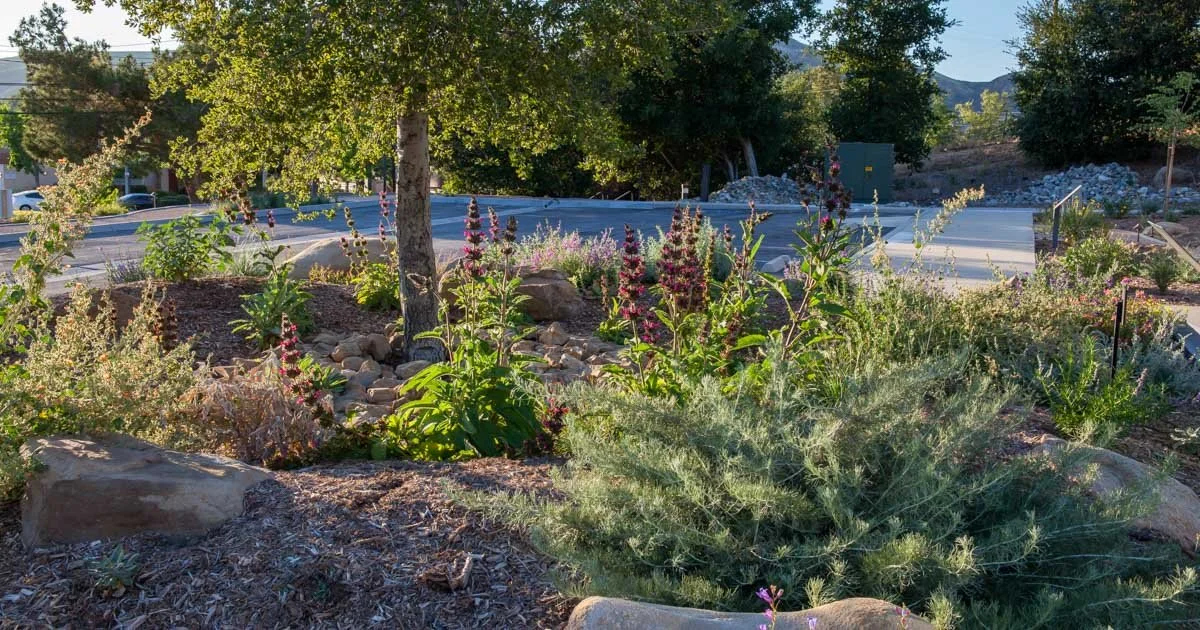
We design beautiful and functional landscapes that can thrive in persistent drought conditions.
The "New Normal" of disrupted weather patterns and hotter temperatures poses a significant threat to the health and survival of our outdoor landscapes. We plan each site for drought resiliency to protect our clients' investment and to ensure that they can continue to use and enjoy their landscapes when outdoor watering is restricted or prohibited.
Our design objective is to strike a balance between minimizing the amount of water and maintenance required to sustain the landscape, and create special outdoor spaces that enhance our clients' quality of life. Simply designing an arid, desert landscape is not our objective; the landscape must convey a sense of place, be aesthetically pleasing, have shade and shelter, reduce ambient temperatures, provide habitat and food for wildlife, and most importantly give inspiration and a sense of well-being.
Even in the driest times, the Southern California climate can sustain a rich and diverse landscape with few resources if the plant palette is climate-appropriate, rainwater is captured and stored, the water needs of the plants and trees can be met with seasonal rains augmented with stored rainwater, and the soil is full of healthy, active biology.
Our design process focuses on integrating the hardscape, grading, plant palette, rainwater harvesting and irrigation systems so they sustainably and efficiently collect, store and distribute water.
We strongly believe that technology can enable our drought resilient landscapes to become self-sustaining. Our proprietary automation systems optimize rainwater storage capacity and deliver water throughout the landscape when and where it is most needed to maintain the health of the plants. Because our automation systems have designed and integrated the rainwater harvesting and irrigation systems, they require little, if any, interaction with the client or their maintenance personnel.
Who We Are

Tom Rau, ASLA, PLA
Principal, Landscape Architect California License #5681
Tom is the President of Urban Water Group, Inc., a Los Angeles-based landscape architecture studio dedicated to designing beautiful and ecologically-functioning landscapes that thrive in drought conditions.
He specializes in applying nature-based solutions that integrate planting, grading, stormwater, irrigation and hardscape design to enhance nature's ecological processes, promote biodiversity, sequester carbon, infiltrate stormwater, and address climate change.
Tom teaches Plant Studies II and Beginning Stormwater Management in the UCLA Extension Landscape Architecture Certificate Program and has led hands-on workforce training workshops for The Huntington Library, Art Museum and Botanical Gardens; Las Virgenes Municipal Water District; The City of Rosemead; Surfrider Foundation’s Ocean Friendly Gardens; G3 Green Gardens Group; and LADWP.
He earned his Professional Certificate in Landscape Architecture at UCLA Extension where he has been an instructor since 2013, and apprenticed at EDSA in Santa Monica where he worked on international resort and city planning projects in the Middle East, Europe and China.
He holds a Bachelor’s degree in Architecture from UC Berkeley and an MBA from USC, and has an extensive background in project management, construction administration, land development and portfolio management of commercial and residential properties.
Consultants We Work With

Carol Bornstein
Horticulturalist, Garden Writer and Educator
Carol is one of Southern California’s most highly respected native plant specialists. Throughout her career, she has championed the landscape value of California’s native plants and the benefits of designing gardens in harmony with nature. Carol co-authored two books, the national award-winning California Native Plants for the Garden and Reimagining the California Lawn: Water-conserving Plants, Practices, and Designs. She is currently Director of the Nature Gardens at the Natural History Museum of Los Angeles County, where she oversees the long-term care and development of this 3.5-acre habitat for urban wildlife. For nearly 30 years, she was horticulturist at the Santa Barbara Botanic Garden. She continues to advocate for sustainable, regionally appropriate landscaping and to share her knowledge of plants native to California and other mediterranean and dry-climate regions through her writing, teaching, and design work.